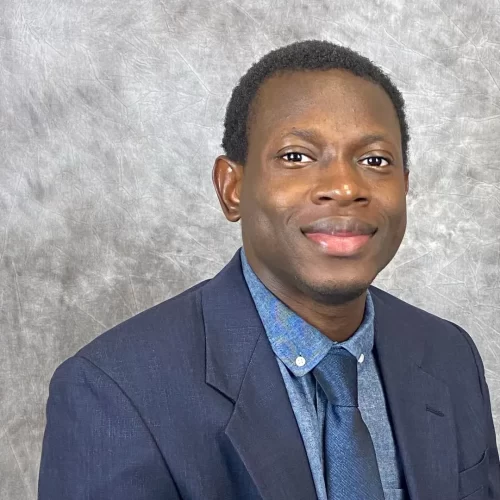

When I stepped into the Snake Farm Substation in Louisiana, I expected to learn about equipment. What I didn’t expect was how clearly the visit would connect my research at the University of New Orleans to some of the most urgent conversations happening across the United States today, conversations about energy, innovation, and the growing digital world that depends on reliable power every second of the day.
Inside the control building, real-time data from across Entergy’s network streamed across the monitors, frequency traces, voltage profiles, and automated protection signals. It reminded me of something I had been studying at PERL for months: the modern grid is no longer just an electrical system. It is the backbone of America’s digital infrastructure.
A decade ago, a grid disturbance might dim lights or delay a factory shift. Today, the same disturbance can interrupt an AI training run, slow down a hyperscale data center, disrupt cloud storage, or freeze high-frequency trading servers. As I watched the screens, I realized that the simulations we run every week at UNO mirror the exact challenges these American facilities face.
In many ways, the research I do at PERL is built for this moment.
At the university, we analyze how grids behave when renewables reshape traditional patterns, when inverter-based resources replace rotating machines, and when real-time visibility becomes the difference between a smooth operation and a cascading shutdown. What began as a scientific interest has grown into an understanding of how essential this work is for the United States fespecially as data centers expand at a pace few expected.

Across the country, cities are welcoming vast new digital campuses: AI supercomputing clusters, cloud storage facilities, cryptocurrency validators, semiconductor plants. These spaces pull extraordinary amounts of power, dense, sensitive, and constant. They do not simply require electricity; they require stability.
A slight voltage dip can interrupt thousands of servers.
A small frequency swing can ripple into millions of dollars in downtime.
A poorly modeled renewable addition can introduce oscillations that operators must understand before they manifest in the field.
This is the world my research speaks to.
At PERL, I work on small-signal stability models that predict how the system responds under different renewable and load scenarios. I study inverter behavior, not as an academic exercise, but as the foundation of the next era of American power. I build digital twins of substations—the same kind of predictive environments U.S. utilities increasingly rely on to integrate large data campuses and prepare for future loads.
As I stood in that control room, watching operators track the health of the grid in real time, it felt familiar. Much of it resembles what I do daily at UNO: designing monitoring systems, simulating contingencies, and evaluating how the grid behaves under both expected and unexpected conditions.
And in that moment, I understood something clearly:
My work is not only about understanding power systems—it is about strengthening the systems that support the nation’s digital future.
Reliable electricity is now intertwined with America’s most strategic industries:
• cloud computing
• financial markets
• defense-related cyber operations
• semiconductor manufacturing
• electrified transportation
• AI research

All of these rely on the same thing: Agrid capable of carrying this vision.
The research I conduct at the University of New Orleans, rooted in stability, digitalization, and real-time intelligence, helps answer the very questions U.S. grid operators are asking as the country moves into an era powered by data as much as electricity.
As I left the Snake Farm Substation, I paused by the transmission yard, watching the lines stretch across Louisiana’s horizon. They carried far more than energy: they carried the weight of a nation that depends on reliable power to stay innovative, competitive, and connected.
And I felt a quiet conviction that the work we do at UNO, the simulations, the monitoring frameworks, the digital models, fits directly into that mission.
In a world where data is becoming the new currency, power system stability is the vault that protects it. My research is one small, steady contribution toward building that vault stronger, smarter, and ready for the future the United States is rapidly stepping into.