

In a world that once thrived on the ink and paper of handwritten letters, the dawn of the telephone heralded a revolutionary shift in communication. This journey, tracing the evolution of technology from the late 19th to the late 20th century, is marked by the brilliance of key inventors whose work reshaped society. Imagine the excitement of being able to connect with loved ones at the mere turn of a dial! This transformation can be largely attributed to the groundbreaking contributions of Granville T. Woods, Henry Sampson, and Jesse Russell.
Granville T. Woods: Inventing a New System for Communication
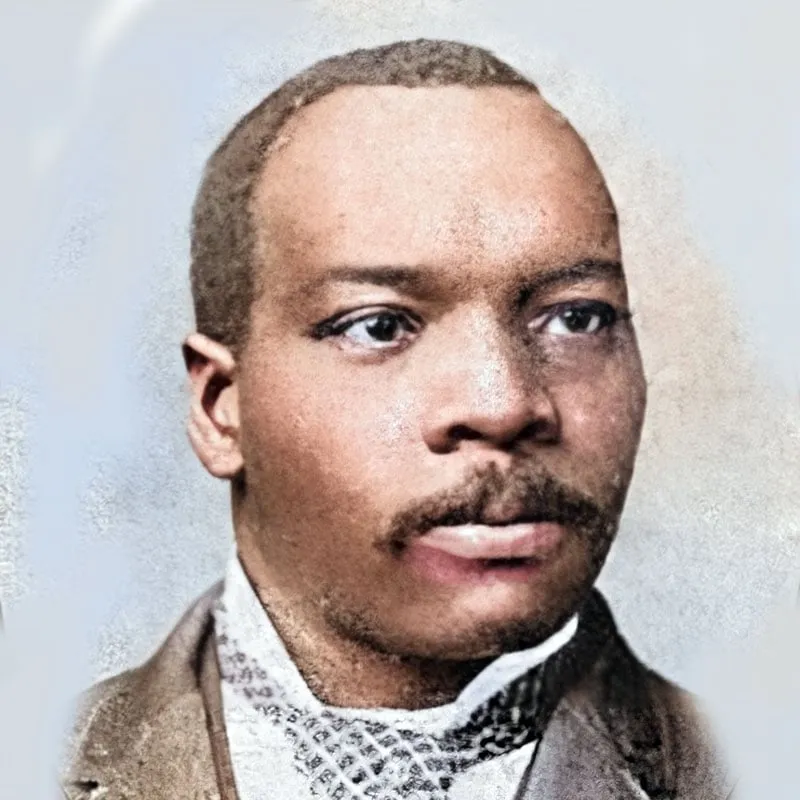
Granville T. Woods was a foundational figure in electrical engineering. In 1885, he was granted a patent for what he termed “Telegraphony”—a device he declared a “new and useful System and Apparatus” in his patent application.
This was not merely an improvement; it was a novel invention that merged the telephone and telegraph into a single, switchable apparatus. Telegraphony allowed operators to send both Morse code signals and clear voice communication over the same long-distance wires. This breakthrough democratized communication, enabling even inexperienced persons to send messages by voice, dramatically expanding the potential for personal and business connection and laying a direct groundwork for future telecommunications systems.
Granville T. Woods’s 1885 patent describes a new invention. The overall apparatus—Telegraphony—is patented as a new combination and new system that did not exist before.
- Direct Declaration: The patent opens with the definitive legal statement required for a new invention:”Be it known that I, GRANVILLE T. WOODS … have invented a new and useful System and Apparatus for the Transmission and Reception of Messages by Electricity…” (Emphasis added).The phrases “new and useful” are key legal terms in patent law to distinguish a novel invention from a mere improvement.
- Describes a New System with a New Name: Woods doesn’t just say he improved the telegraph or telephone. He states he has created a new system, which he names:”My system (called by me Telegraphony)…”The coining of a new name for the entire system strongly indicates it was considered a novel combination and function, not just an upgrade to an existing single device.
- Solves Problems in a New Way: The patent outlines the failings of the existing “ordinary mode” and then states:”My system… entirely overcomes the failings of the ordinary key and sounder and has a wide range of usefulness…”This language of entirely overcoming old problems with a new system is the language of invention.
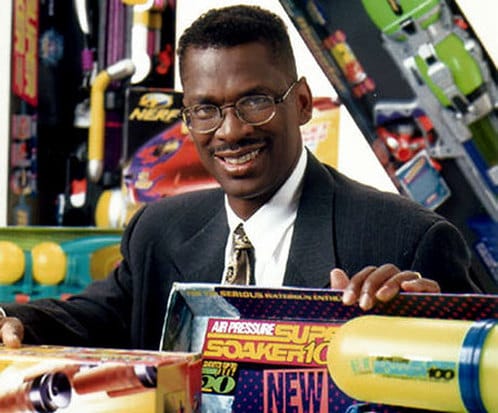
Henry Sampson: Powering The Wireless Future
Fast forward to the 1960s, and we meet Henry Sampson, a nuclear engineer who made a critical, though often overlooked, contribution to wireless technology. In 1971, Henry Sampson co-patented the “gamma-electric cell,” a pioneering invention that converted high-energy gamma radiation directly into electrical power which he initially filed a patent for in 1968. While not a direct component of cell phones, this ground-breaking technology demonstrated a reliable way to generate significant power in a compact space. It served as a crucial stepping stone in the development of power systems for satellites and deep-space probes, which are fundamental to the infrastructure of global wireless communication, thereby helping to pave the way for the cell phone revolution.
Jesse Russell: The Leap to Digital Wireless
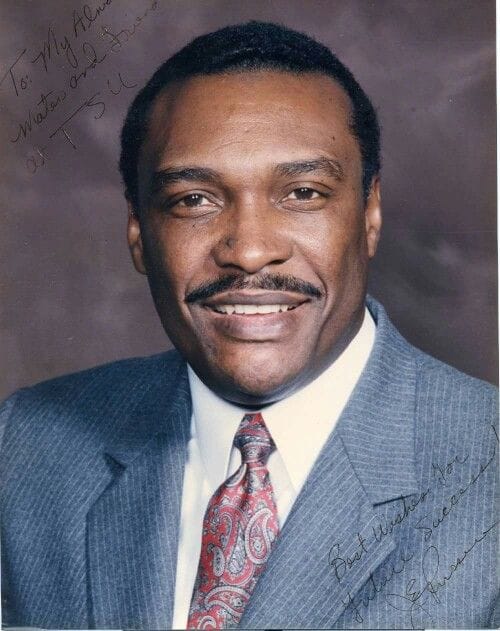
As technology continued to evolve, Jesse Russell emerged as a pivotal force in the late 1980s. A visionary electrical engineer, Russell led the team that pioneered the concept for the first digital cellular phone. His work was fundamental in shifting mobile communication from analog to digital. This revolutionary leap transformed the way people connected, making communication clearer, more secure, and capable of supporting future data services. It untethered us from landlines, making it possible to connect anytime, anywhere, and truly putting the world at our fingertips.
A Legacy of Connection
Today’s smartphone is a direct descendant of this lineage of innovation. The journey from Granville T. Woods’ “new and useful” Telegraphony system to Jesse Russell’s digital cellular architecture, enabled by Henry Sampson’s power technology, showcases a remarkable century of progress. It reflects how foundational inventions, fueled by creativity and vision, can fundamentally reshape human interaction. The groundbreaking work of these three pioneers built the connected world we live in today.